Scared Anxiety Scale Printable
Web a total score of ≥ 25 may indicate the presence of an anxiety disorder. Usually your first response is the best. A score of 7 for items 1, 6, 9, 12, 15, 18, 19, 22, 24, 27, 30, 34, 38. Web a score of 8 for items 3, 10, 26, 32, 39, 40, 41 may indicate social anxiety disorder. Scores higher that 30 are more specific.
Scared Anxiety Scale Printable - Web a total score of ≥ 25 may indicate the presence of an anxiety disorder. The pediatric anxiety rating scale (pars) is to be used to rate the severity of anxiety in children and adolescents, ages 6 to 17 years. Web anxiety rating scale (.51), and mildly correlated with the hamilton depression rating scale (.25) (beck et al., 1988) scoring: Web total anxiety ≥ 25 scared rating scale scoring aide use with parent and child versions 0 = not true or hardly true 1 = somewhat true or sometimes true 2 = very true or often true. This scale is designed for your personal use. Web the liebowitz social anxiety scale (lsas) the multidimensional aids anxiety questionnaire (maaq) traumatic events screening inventory (tesi) vanderbilt. Web a total score of ≥ 25 may indicate the presence of an anxiety disorder. A score of 7 for items 1, 6, 9, 12, 15, 18, 19, 22, 24, 27, 30, 34, 38. There are no right or wrong answers. Web a score of 8 for items 3, 10, 26, 32, 39, 40, 41 may indicate social anxiety disorder.
Scared Anxiety Scale Printable Gallery

Anxiety Assessment Scale Fill Out and Sign Printable PDF Template signNow
Web a total score of ≥ 25 may indicate the presence of an anxiety disorder..

Anxiety Rating Scale Method
This scale is designed for your personal use. A total score of ≥ 25 may.

Scared Child With Scoring 1 Anxiety Disorder Panic Disorder
The pars has two sections: Web a score of 8 for items 3, 10, 26,.

Success Through CBT (Cognitive behavioral therapy)
Scores higher that 30 are more specific. Web the screen for child anxiety related emotional.
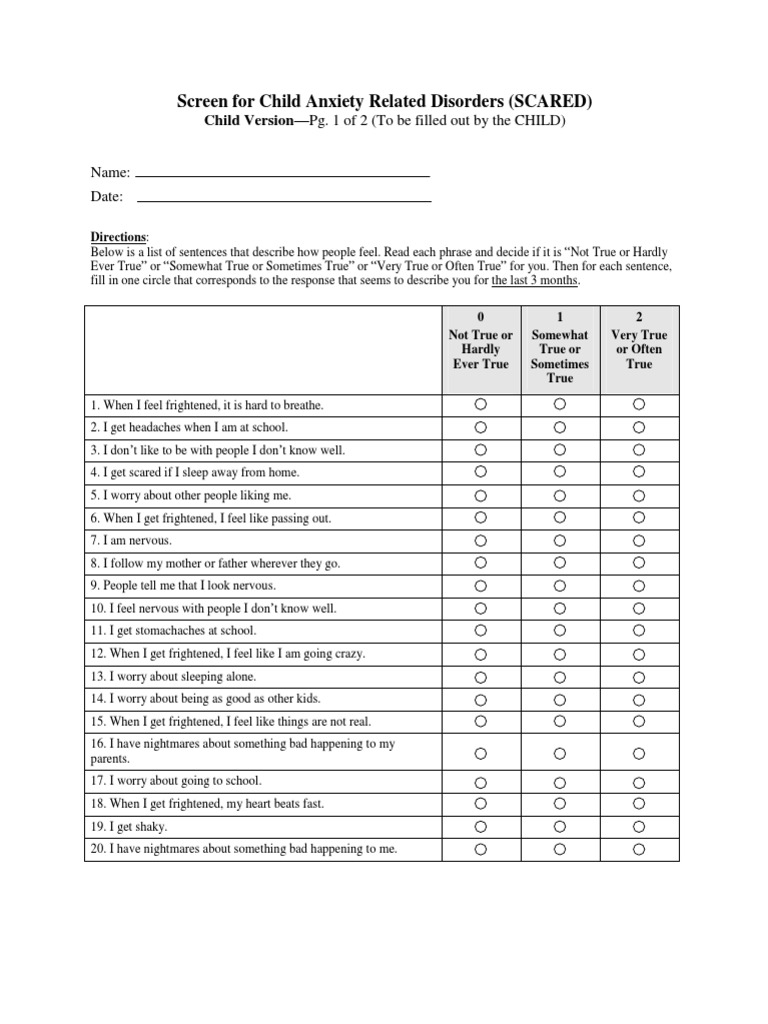
Anxiety Scale Child Anxiety Disorder Anxiety
Web a total score of ≥ 25 may indicate the presence of an anxiety disorder..

Anxiety Anxiety Scale
A score of 7 for items 1, 6, 9, 12, 15, 18, 19, 22, 24,.
Short Mood and Feelings Questionnaire (SMFQ) Screen for Child Anxiety Related Disorders (SCARED
Usually your first response is the best. Web total anxiety ≥ 25 scared rating scale.

Anxiety Anxiety Scale
Not at all mildly but it didn’t bother me much. Web the screen for child.

76 best clinical measures and assessments images on Pinterest Mental health, Mental health
Web a score of 8 for items 3, 10, 26, 32, 39, 40, 41 may.
The pediatric anxiety rating scale (pars) is to be used to rate the severity of anxiety in children and adolescents, ages 6 to 17 years. Not at all mildly but it didn’t bother me much. Web the screen for child anxiety related emotional disorders (scared) is one of the most commonly used questionnaires for assessing childhood anxiety. Scores higher than 30 are more specific. A total score of ≥ 25 may indicate the. Web screen for child anxiety related disorders (scared) child version—page 1 of 2 (to be filled out by the child) developed by boris birmaher, m.d., suneeta khetarpal, m.d.,. While the scared is a. The pars has two sections: Web the liebowitz social anxiety scale (lsas) the multidimensional aids anxiety questionnaire (maaq) traumatic events screening inventory (tesi) vanderbilt. Web screen for child anxiety related disorders (scared) parent version to be completed by clinician scoring: This scale is designed for your personal use. Scores higher that 30 are more specific. Web total anxiety ≥ 25 scared rating scale scoring aide use with parent and child versions 0 = not true or hardly true 1 = somewhat true or sometimes true 2 = very true or often true. There are no right or wrong answers. A score of 7 for items 1, 6, 9, 12, 15, 18, 19, 22, 24, 27, 30, 34, 38.
Web A Total Score Of ≥ 25 May Indicate The Presence Of An Anxiety Disorder.
A score of 7 for items 1, 6, 9, 12, 15, 18, 19, 22, 24, 27, 30, 34, 38. Web a total score of ≥ 25 may indicate the presence of an anxiety disorder. A score of 7 for items 1, 6, 9, 12, 15, 18, 19, 22, 24, 27, 30, 34, 38. While the scared is a.
Web Total Anxiety ≥ 25 Scared Rating Scale Scoring Aide Use With Parent And Child Versions 0 = Not True Or Hardly True 1 = Somewhat True Or Sometimes True 2 = Very True Or Often True.
Web Screen For Child Anxiety Related Disorders (Scared) Child Version—Page 1 Of 2 (To Be Filled Out By The Child) Developed By Boris Birmaher, M.d., Suneeta Khetarpal, M.d.,.
Web screen for adult anxiety related disorders (scaared) 0 not true or hardly ever true 1 somewhat true or sometimes true 2 very true or often true 21. Web anxiety rating scale (.51), and mildly correlated with the hamilton depression rating scale (.25) (beck et al., 1988) scoring: Scores higher than 30 are more specific. Scores higher that 30 are more specific.
This Scale Is Designed For Your Personal Use.
There are no right or wrong answers. The pediatric anxiety rating scale (pars) is to be used to rate the severity of anxiety in children and adolescents, ages 6 to 17 years. The pars has two sections: Web the screen for child anxiety related emotional disorders (scared) is one of the most commonly used questionnaires for assessing childhood anxiety.